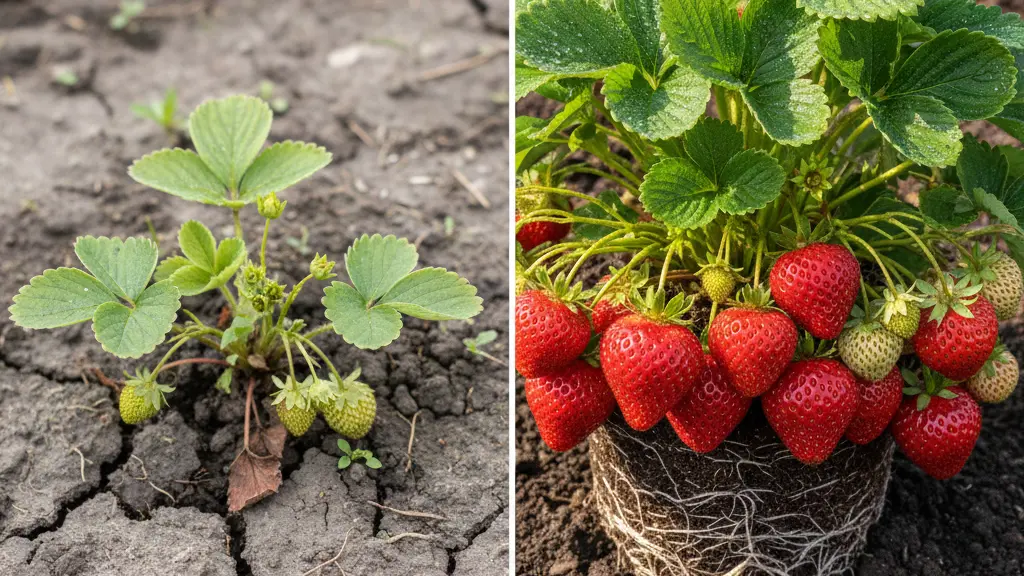
Even healthy strawberry plants in pots often struggle with small, slow fruits — and the problem isn’t leaves or fertilisers, it’s roots. The Fast Root-Expansion Technique unlocks the full potential of your plants, helping strawberries grow bigger, ripen faster, and taste sweeter — all without chemicals. This simple, step-by-step method transforms ordinary potted strawberries into fruiting powerhouses, giving you a bountiful harvest in less time.
Why Strawberry Plants Fail to Fruit Well in Pots
Strawberries have shallow roots, but they are fast feeders. In containers, this becomes a problem when:
- Roots stay trapped near the surface
- Soil becomes compact and airless
- Watering is too frequent
When roots feel restricted, the plant prioritises survival over fruit production. That’s why many strawberry plants flower well but produce weak or undersized fruits.
9 Balcony Plants That Turn Dramatic New Colors Overnight When It Gets Cold — The Glow-Up Is Unreal”
Why Root Expansion Matters More Than Fertilisers
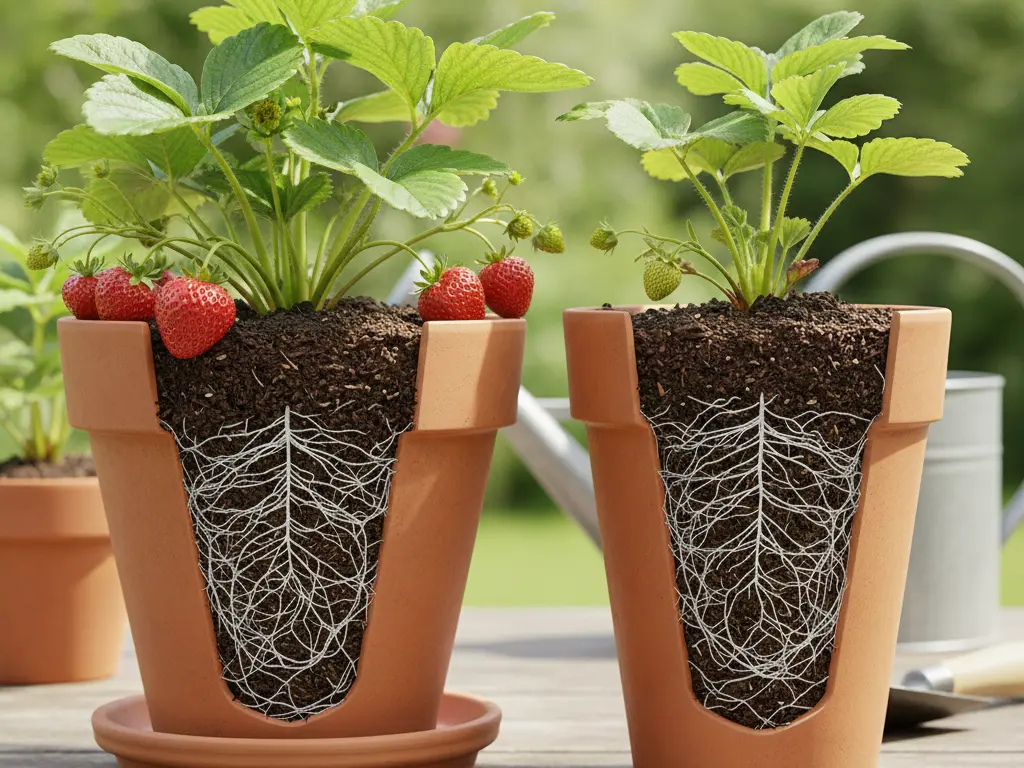
Adding more fertiliser usually increases leaf growth, not fruit size.
- Weak roots cannot absorb nutrients efficiently
- Excess nitrogen delays fruit filling
- Poor root spread reduces sugar buildup in fruits
Strawberry plants fruit confidently only when their roots feel spread out, oxygen-rich, and stable. Root expansion sends the signal that the plant can support healthy fruits.
Step-by-Step: The Fast Root-Expansion Technique for Strawberries
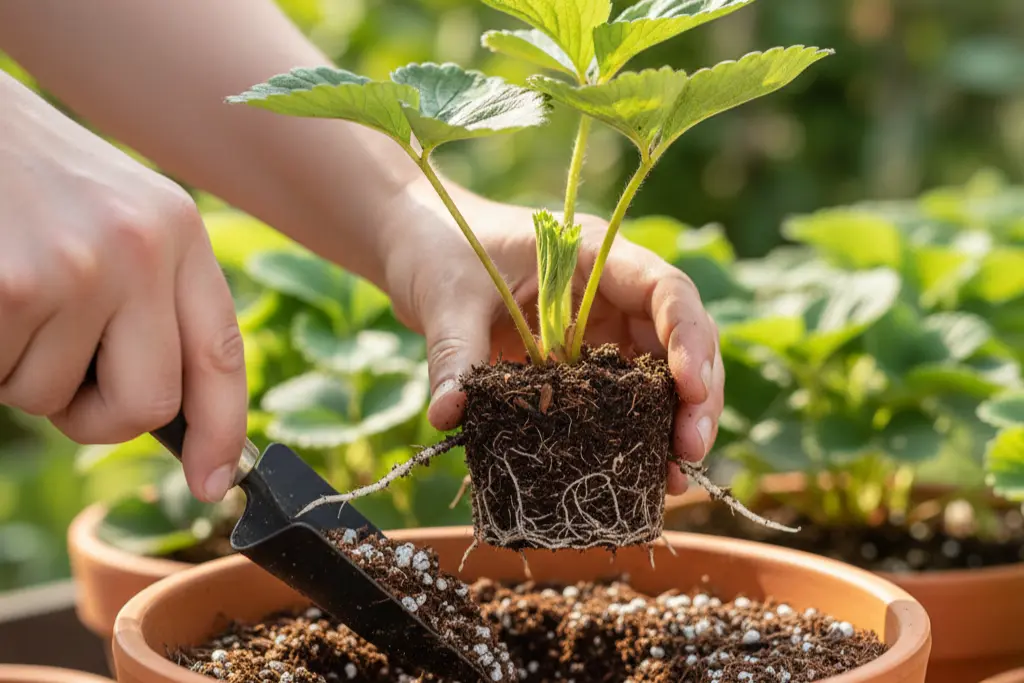
Step 1: Choose the Right Pot
Use a wide pot, not a narrow one.
- Width: 12–14 inches
- Depth: 8–10 inches
- Best types: fabric pots or terracotta
Wide pots allow lateral root spread, which directly improves fruit size.

Step 2: Prepare a Root-Expansion Soil Mix
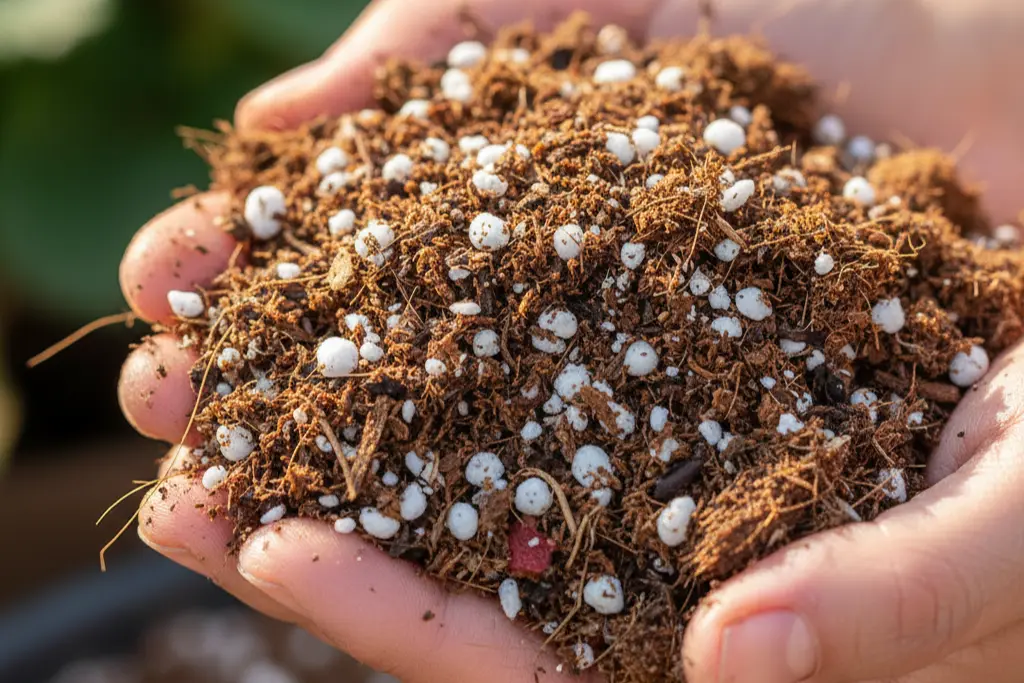
Mix the following:
- 40% cocopeat
- 20% perlite or coarse sand
- 30% vermicompost
- 10% garden soil
- A small pinch of neem cake (optional)
Light, airy soil allows roots to move freely, rather than getting trapped.
Step 3: Plant Correctly (Very Important)
- Keep the strawberry crown slightly above the soil level
- Never bury the crown
- Spread roots gently sideways while planting
- Press soil lightly — do not compact
Wrong planting depth blocks root expansion and delays fruiting.
Step 4: First Watering to Activate Roots
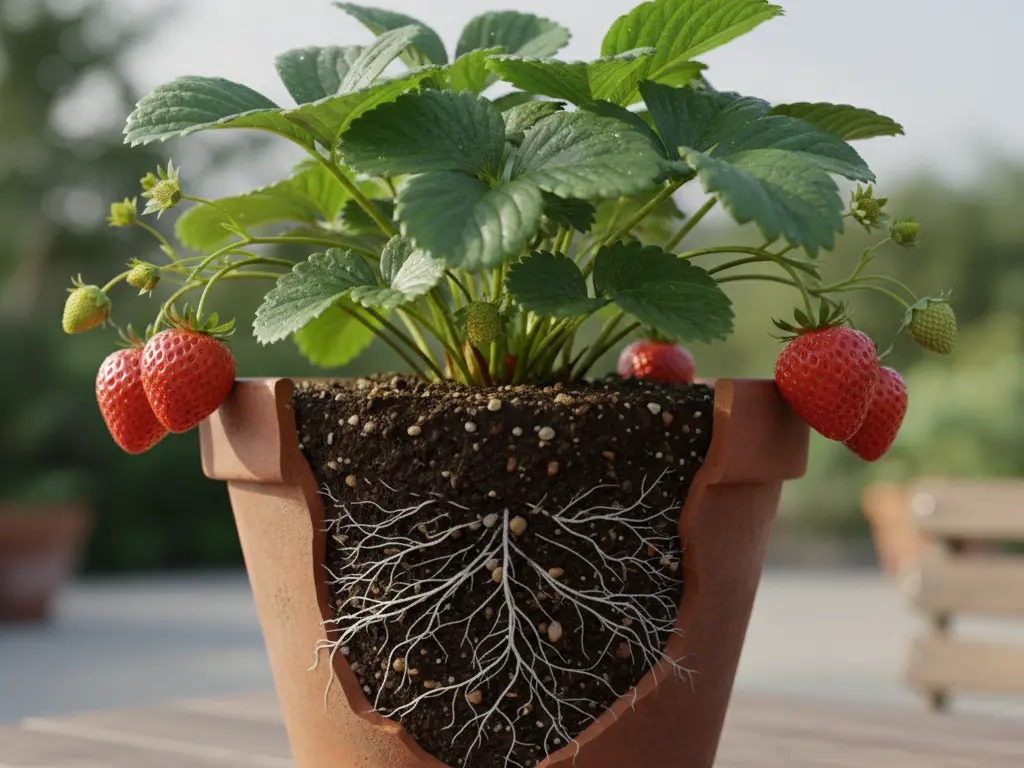
- Water deeply once after planting
- Let excess water drain completely
- Do not water again until the topsoil feels slightly dry
This encourages roots to grow downward and sideways.

Step 5: Follow the Root-Trigger Watering Cycle
- Water every 2–3 days (depending on weather)
- Allow a slight dry gap between watering
- Water only in the morning
Mild stress prompts roots to search for moisture, thereby accelerating expansion.
Step 6: Mulch to Protect Expanding Roots
Use light mulch:
- Dry straw
- Coconut husk chips
- Dry grass
Keep mulch thin and away from the crown.
Mulching keeps soil temperature stable and roots active.
Step 7: Feed Roots, Not Leaves
Every 15 days, use only one:
- Compost tea
- Very low-dose seaweed extract (early stage)
Avoid high-nitrogen fertilisers.
Overfeeding slows root growth and reduces fruit quality.
Step 8: Watch for Early Success Signs
Within 2–3 weeks, you should notice:
- Thicker crown
- More flower clusters
- Fruits fill faster after pollination
These signs confirm that root expansion is working.
Common Mistakes That Stop Root Expansion
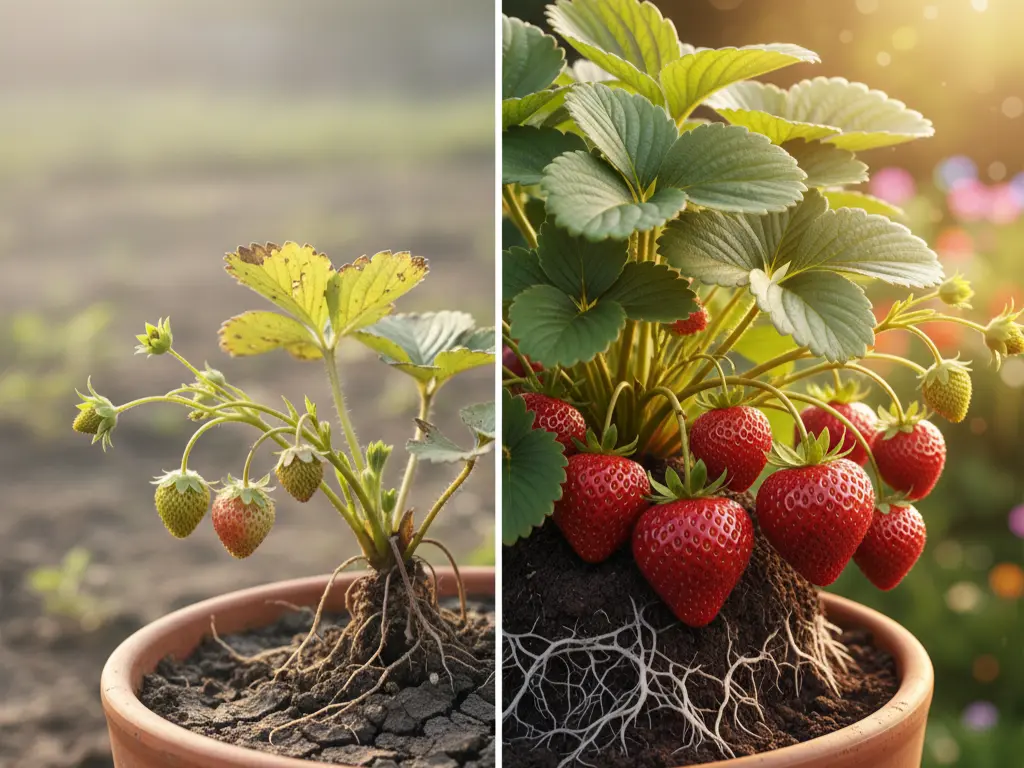
- Small or narrow pots
- Compacting soil
- Daily watering
- No mulch in warm weather
- Excess fertilizer
Avoiding these mistakes alone can greatly improve fruiting.
Final Verdict
Strawberry plants don’t need extra fertiliser—they need space and air beneath the soil. When roots can grow freely, the plant shifts energy from survival to fruiting, producing bigger, juicier berries, faster harvests, and naturally sweeter fruits every season.