
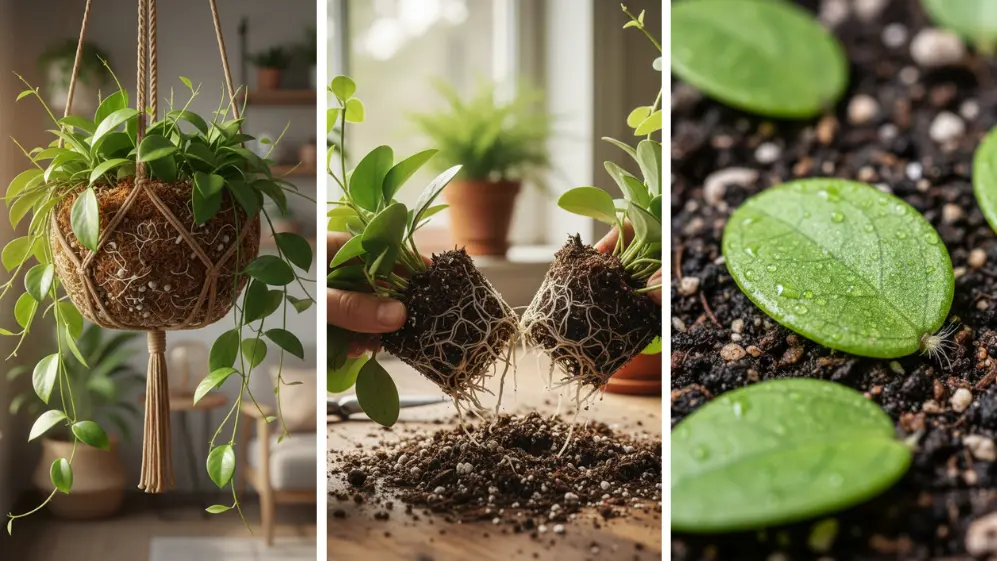
This Dischidia Propagation Guide is everything you need to multiply your plants at home — six methods, zero confusion, real results.
Dischidia is a trailing epiphyte from Southeast Asia that grows on trees rather than in soil. It loves airflow, hates overwatering, and adapts beautifully to indoor life. That same nature makes it one of the easiest plants to propagate — once you know what you’re doing.
What Makes Dischidia So Easy to Propagate?
Its nodes are biologically wired to produce roots the moment warmth and moisture hit them. You don’t need rooting hormone. You don’t need a greenhouse. You need the right method and three simple rules.
The 3 Golden Rules:
- Healthy node — roots come from here, not leaves
- Good airflow — stale wet air kills cuttings fast
- Controlled moisture — damp, never wet
Nail these, and Dischidia practically propagates itself.
Dischidia Propagation Guide: 6 Methods Ranked Easiest to Advanced
Method 1: Stem Cuttings — Best for Beginners
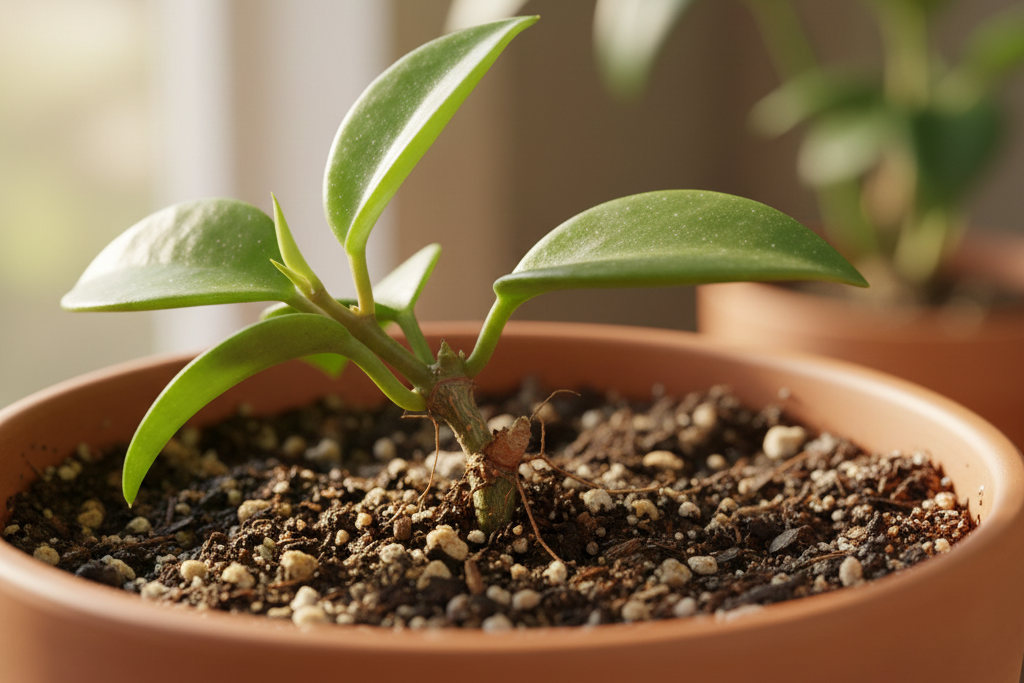
This is the method every Dischidia Propagation Guide recommends first — and for good reason. Highest success rate, fastest roots, simplest process.
How to do it:
- Cut just below a healthy node with clean scissors
- Let the cut end callus for 24–48 hours — non-negotiable, this prevents rot
- Place into an airy mix (orchid bark + perlite)
- Keep lightly moist and warm (above 20°C)
- Roots appear in 2–3 weeks
Skipping the callus step is the #1 reason cuttings rot. Don’t rush this.
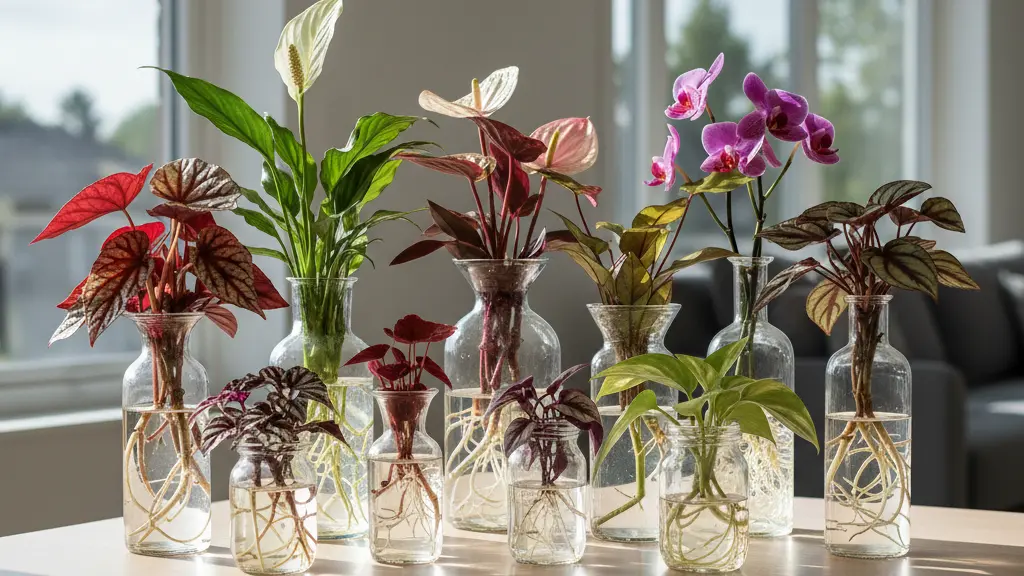
Method 2: Water Propagation
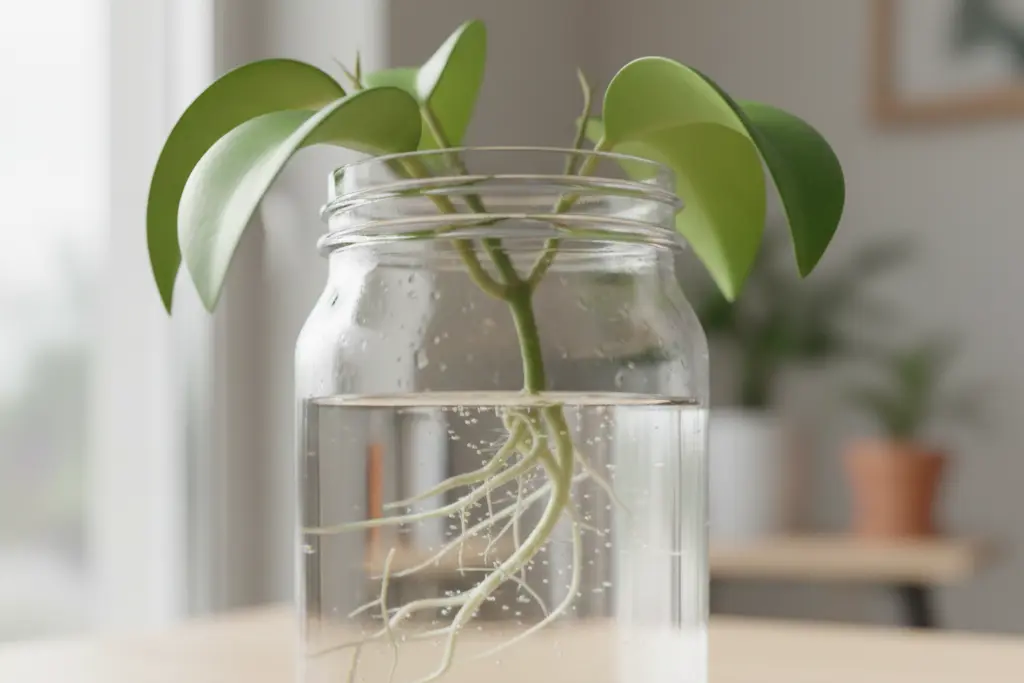
Simple, visual, satisfying — you can literally watch roots grow.
- Node sits in clean water; leaves stay dry above the waterline
- Change the water every 3–4 days to stop bacteria
- Transfer to soil once roots hit 2–3 cm — water roots are fragile, handle gently
Method 3: Sphagnum Moss
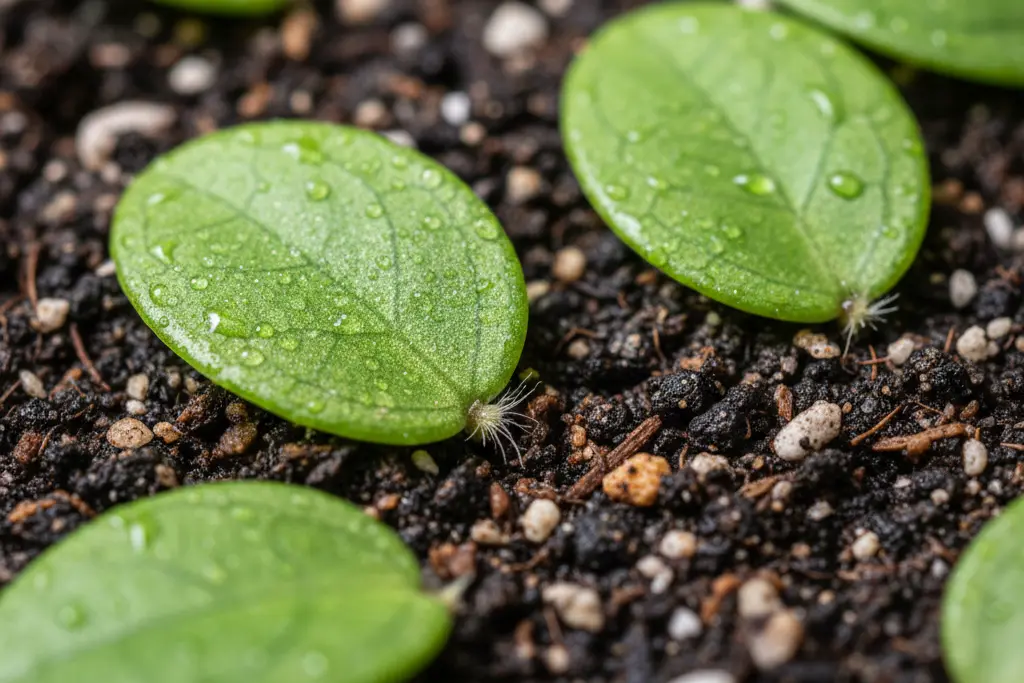
Best choice for rare or delicate Dischidia varieties where failure isn’t an option.
- Moss stays damp — never soggy or dripping
- The node makes direct contact with the moss
- Place in a warm, bright spot with good ventilation
- Roots form in 3–4 weeks
Method 4: Air Layering — Highest Success Rate
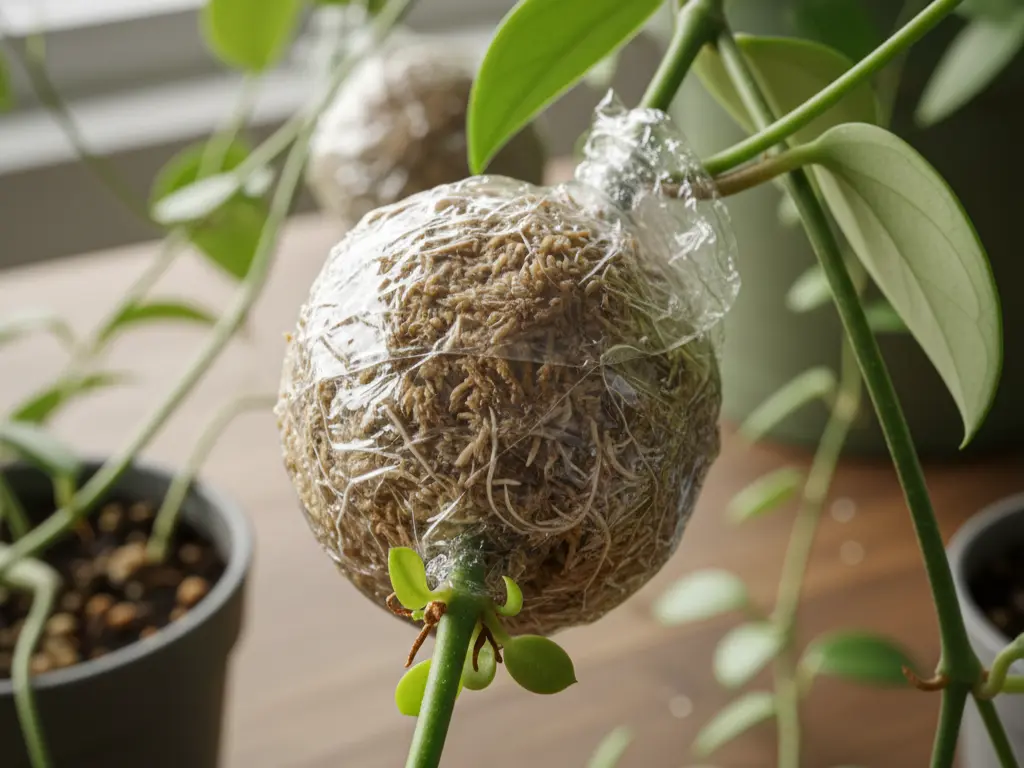
Roots form while the stem stays attached to the parent plant. Zero transplant shock.
- Wrap damp sphagnum moss around a healthy node
- Cover loosely with plastic wrap to hold humidity
- Once roots fill the moss (3–5 weeks), cut and pot immediately
Perfect for premium or rare cultivars where you cannot afford to lose the cutting.
Method 5: Node-Only Propagation
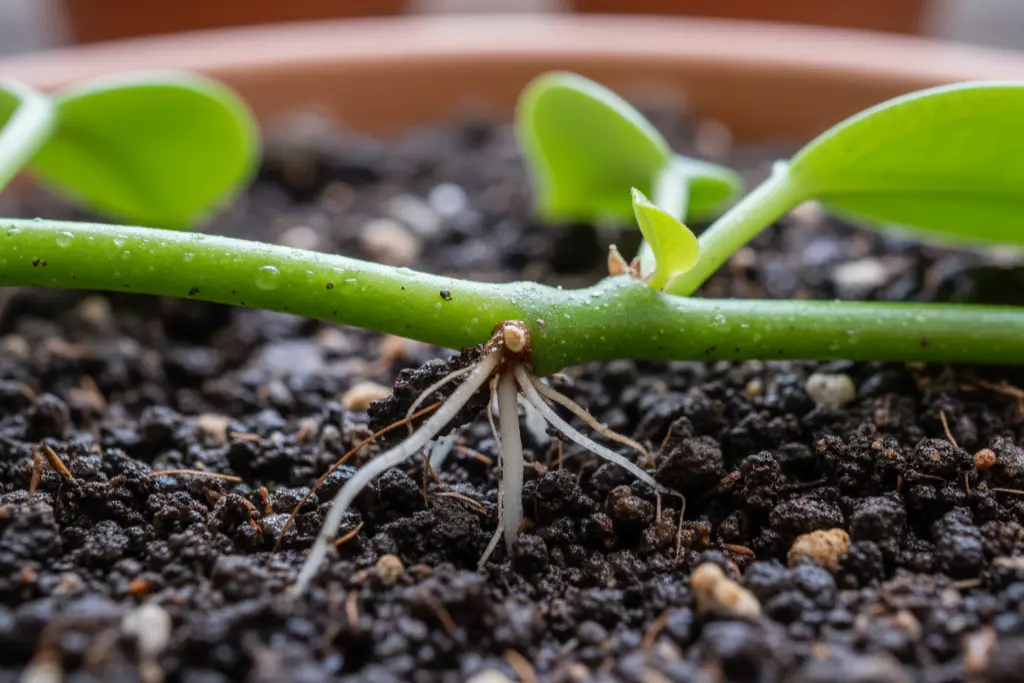
No leaves? No problem. Only the node matters for root initiation.
- Place leafless node sections directly on moist propagation media
- Slower than other methods — roots take 4–6 weeks
- Leaf growth follows after roots establish
- Ideal when your vine has limited leaf-bearing sections
Method 6: Division
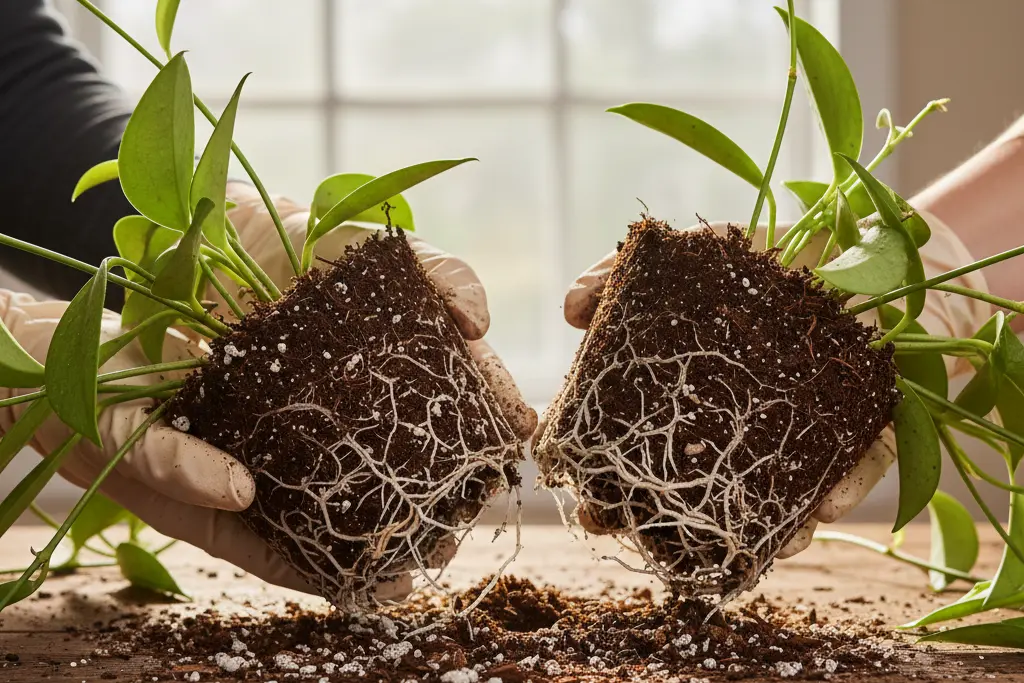
For mature, established plants only — not for young plants or fresh cuttings.
- Unpot carefully and separate root sections by hand
- Each division must have its own roots and a growth point
- Repot immediately into a fresh, airy mix
- Water lightly and keep out of direct sunlight for one week
Quick Care Snapshot
| Light | Bright indirect — no direct sun |
| Water | Let top layer dry between waterings |
| Soil | Orchid bark + perlite + coco coir |
| Temperature | 18–30°C — no frost ever |
| Humidity | 50–70% ideal |
| Fertiliser | Quarter-strength, once a month, spring/summer only |
| Repotting | Let the top layer dry between waterings |
Troubleshooting Your Propagation
| Problem | Cause | Fix |
|---|---|---|
| Yellow leaves | Overwatering | Let medium dry more |
| Wrinkled leaves | Low humidity or underwatering | Mist or move to humid spot |
| Rotting cuttings | Skipped callus step | Start over, callus fully first |
| No roots forming | Too cold | Move above 22°C |
| Mealybugs | Pest infestation | Mist or move to a humid spot |
Trusted External Resources
- Royal Horticultural Society — rhs.org.uk — epiphyte care, humidity management and growing media guidance
- University of Florida IFAS — edis.ifas.ufl.edu — university-backed tropical houseplant propagation science
Frequently Asked Questions
How long does Dischidia propagation take? Most methods in this Dischidia Propagation Guide produce roots in 2–4 weeks. Node-only can take up to 6 weeks.
Can Dischidia live in water permanently? No. Water propagation is a starting method only — long-term growth needs airy soil.
What is the easiest propagation method? Stem cuttings. Always. Just don’t skip the callus step.
Why are my cuttings rotting? Almost always, the callus step was skipped, or the medium was too wet. Dry it out and start fresh.
Does Dischidia need direct sun to propagate? No — bright indirect light only. Direct sun stresses cuttings and slows rooting.
Can Dischidia grow outdoors? Only in warm, frost-free climates with filtered light and shelter from heavy rain.