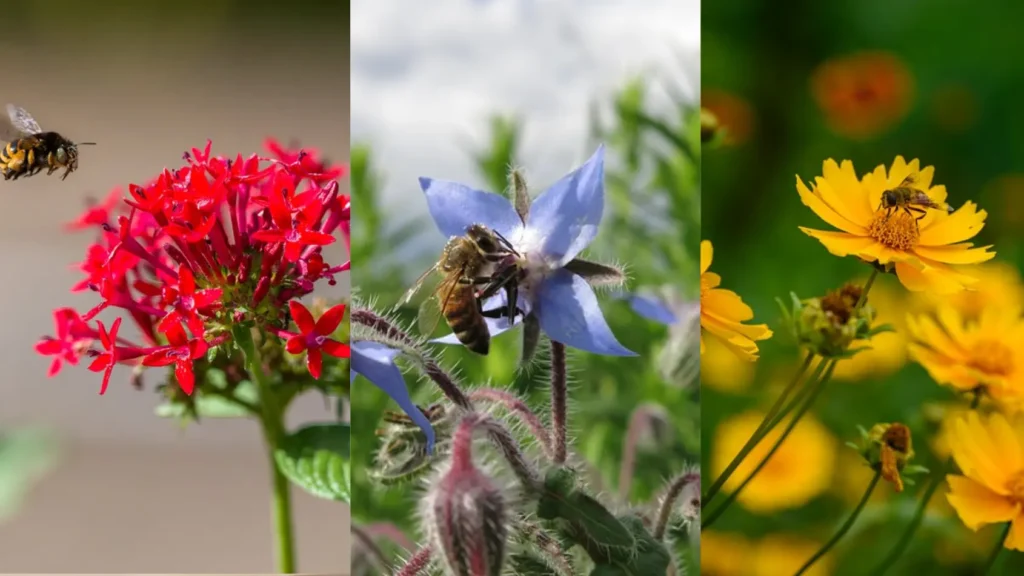
If bees never visit your balcony, it’s not bad luck—it’s the plant selection. Many common balcony plants may look attractive, but they fail to provide the nectar that bees need. The real solution is choosing plants that pollinators genuinely prefer. In this guide, you’ll discover 8 balcony plants that attract bees instantly, helping transform an ordinary balcony into a vibrant, buzzing, pollinator-friendly space.
Why Rare Bee-Attracting Plants Perform Better in Balconies
Rare or underused plants often:
- Produce more accessible nectar
- Bloom for longer periods
- Face less competition for pollinators
- Adapt better to container environments
This makes them ideal for balcony gardening and Google Discover–friendly visual content.
1. Blue Pea Flower (Clitoria ternatea)
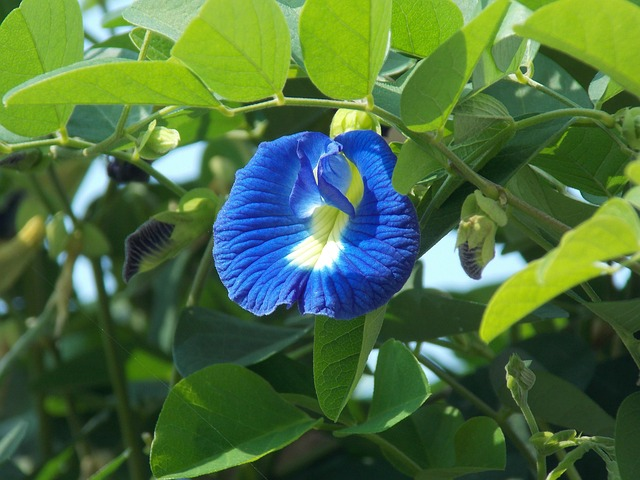
Blue Pea Flower is a rare, exotic climber with intense royal-blue blooms that instantly grab attention—both from humans and bees.
Why it’s special:
The deep blue colour, combined with a wide-open flower structure, makes nectar highly accessible for bees. It’s also a fast-growing climber, perfect for balcony railings.
Key Features / Care Tips:
- Sunlight:
Thrives in full sun to partial sun. At least 5–6 hours of sunlight are required for frequent flowering. - Watering:
Moderate watering. Keep the soil lightly moist but never waterlogged. - Soil Type:
Well-draining soil enriched with compost or vermicompost. - Seasonal Care:
Grows best in the summer and monsoon seasons; growth slows in winter.
Quick Pro Tip:
Harvest flowers regularly—this encourages more blooms and increases bee visits.
2. Scaevola (Fan Flower)
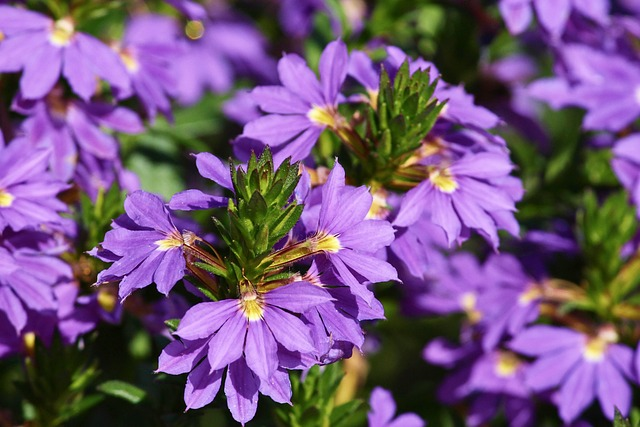
Scaevola is a rare Australian plant with unique half-fan-shaped flowers that look unlike anything else in a typical balcony garden.
Why it’s special:
Its open fan structure provides an easy landing surface for bees, and it blooms continuously without much effort.
Key Features / Care Tips:
- Sunlight:
Full sun to light shade. Morning sun is ideal. - Watering:
Low to moderate watering. Overwatering reduces blooms. - Soil Type:
Loose, sandy, well-draining soil. - Seasonal Care:
Best performance in spring and summer.
Quick Pro Tip:
Grow in hanging baskets to maximise both visual impact and pollinator access.
3. Mexican Heather (Cuphea hyssopifolia)
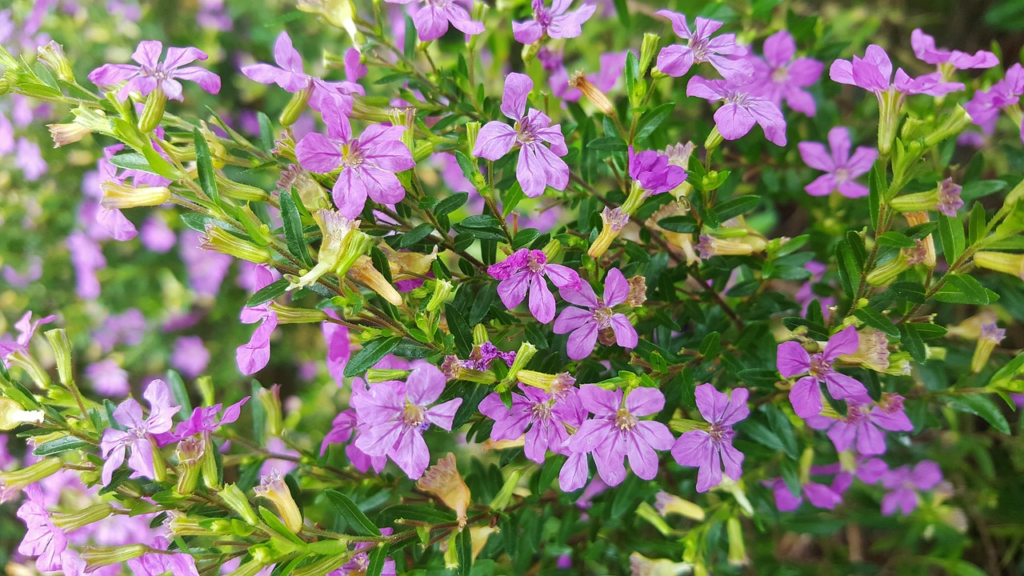
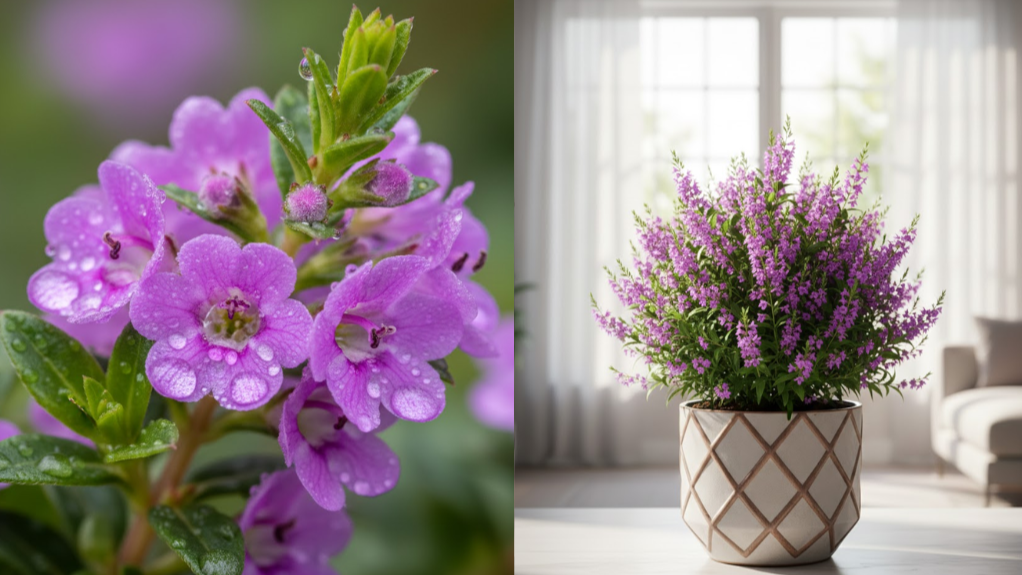
Mexican Heather is an evergreen, fine-textured plant with tiny lavender or pink flowers that bloom almost year-round.
Why it’s special:
While the flowers are small, they produce continuous nectar, making them a reliable food source for bees.
Key Features / Care Tips:
- Sunlight:
Bright sunlight or partial shade. - Watering:
Regular but light watering. Allow the topsoil to dry slightly. - Soil Type:
Fertile, well-draining potting mix. - Seasonal Care:
Evergreen in warm climates; minimal winter maintenance.
Quick Pro Tip:
Light pruning, done every 3–4 weeks, helps keep the plant compact and flower-rich.
4. Pentas (Egyptian Star Cluster)
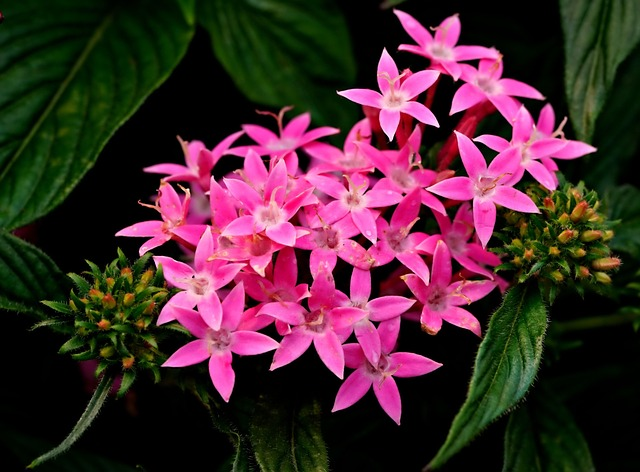
Pentas is a tropical plant, still underutilised, known for its star-shaped flower clusters and exceptional pollinator value.
Why it’s special:
Each flower cluster acts like a nectar station, attracting bees continuously throughout the day.
Key Features / Care Tips:
- Sunlight:
Full sun ensures maximum flowering. - Watering:
Moderate watering; soil should remain slightly moist. - Soil Type:
Rich, organic soil with good drainage. - Seasonal Care:
Flowers almost year-round in warm weather.
Quick Pro Tip:
Red, pink, and lavender varieties attract bees more than white ones.
5. Borage (Starflower)
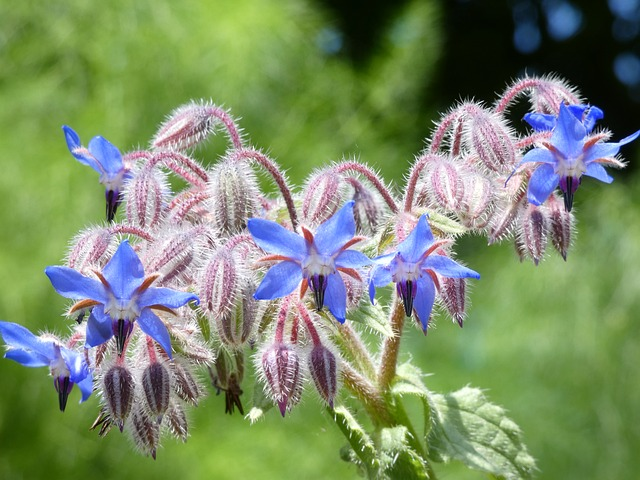
Borage is a rare, edible flowering herb often called one of the best bee plants in the world.
Why it’s special:
It produces more nectar than most ornamental flowers, making it a top choice for pollinators.
Key Features / Care Tips:
- Sunlight:
Full sun to partial shade. - Watering:
Regular watering during active growth. - Soil Type:
Light, well-draining soil. - Seasonal Care:
Grows best in cooler seasons; self-seeds easily.
Quick Pro Tip:
Let it grow naturally without heavy pruning—bees prefer its wild form.
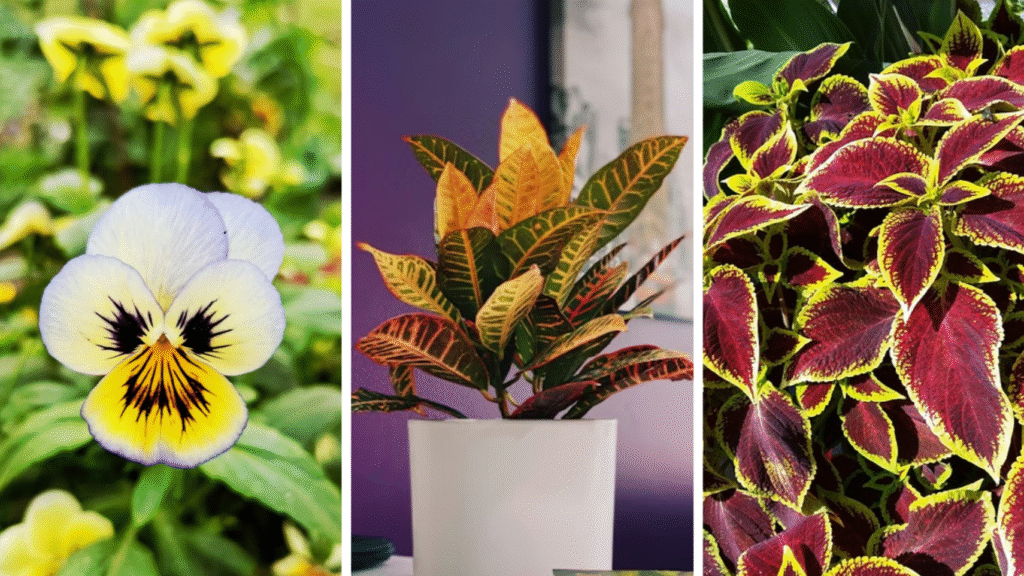
9 Balcony Plants That Turn Dramatic New Colors Overnight When It Gets Cold — The Glow-Up Is Unreal”
6. Ornamental Salvia (Blue, Purple & Coral Varieties)
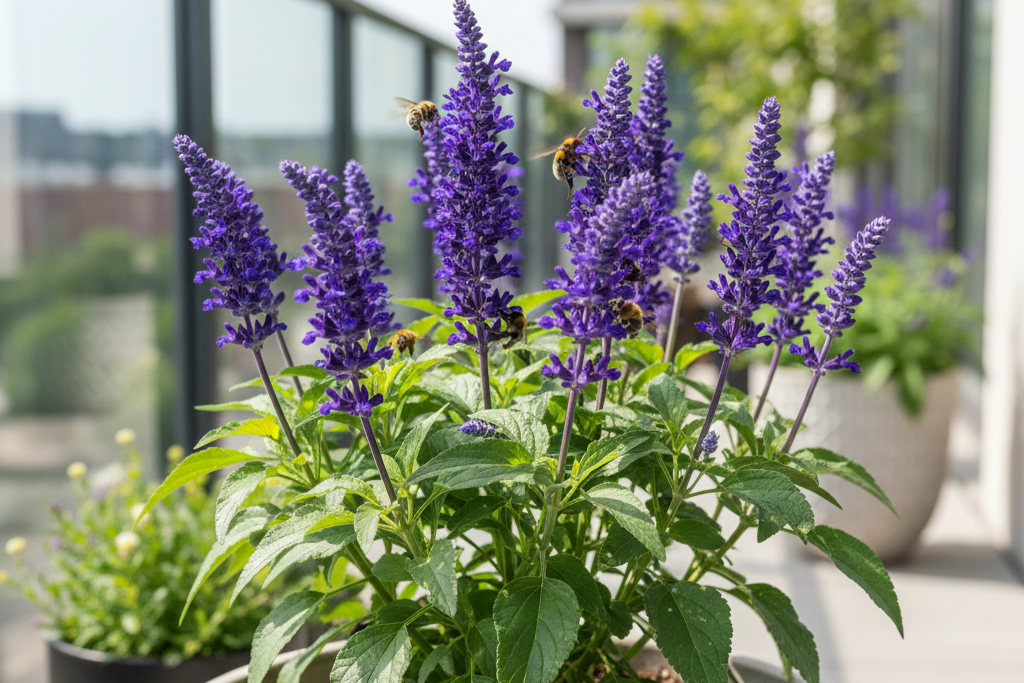
While common salvia exists, ornamental varieties are still rare in balconies and extremely attractive to bees.
Why it’s special:
The tubular flowers are perfectly designed for bees, offering deep nectar access.
Key Features / Care Tips:
- Sunlight:
Full sun for upright growth and intense colour. - Watering:
Moderate watering; drought-tolerant once established. - Soil Type:
Well-draining soil with moderate fertility. - Seasonal Care:
Spring to summer flowering.
Quick Pro Tip:
Avoid over-fertilising—it promotes leaves over flowers.
7. Gaura (Whirling Butterflies Plant)
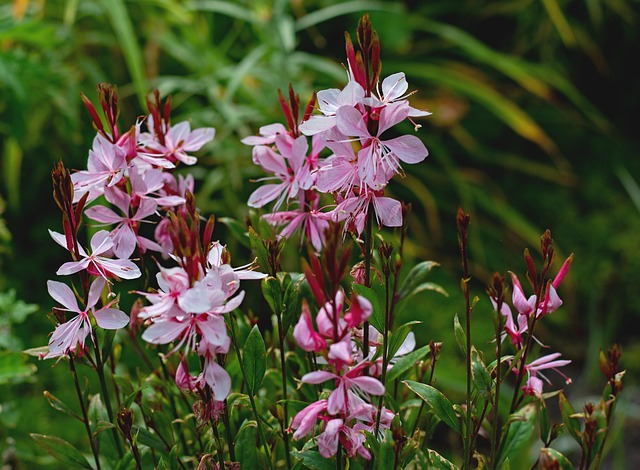
Gaura is an elegant, airy plant with delicate flowers that appear to float in the air.
Why it’s special:
The constant gentle movement of flowers attracts bees visually, even from a distance.
Key Features / Care Tips:
- Sunlight:
Full sun is essential. - Watering:
Low to moderate watering. - Soil Type:
Sandy, fast-draining soil. - Seasonal Care:
Long blooming season from spring to autumn.
Quick Pro Tip:
Avoid rich soil—lean soil produces more flowers.
8. Coreopsis (Tickseed)
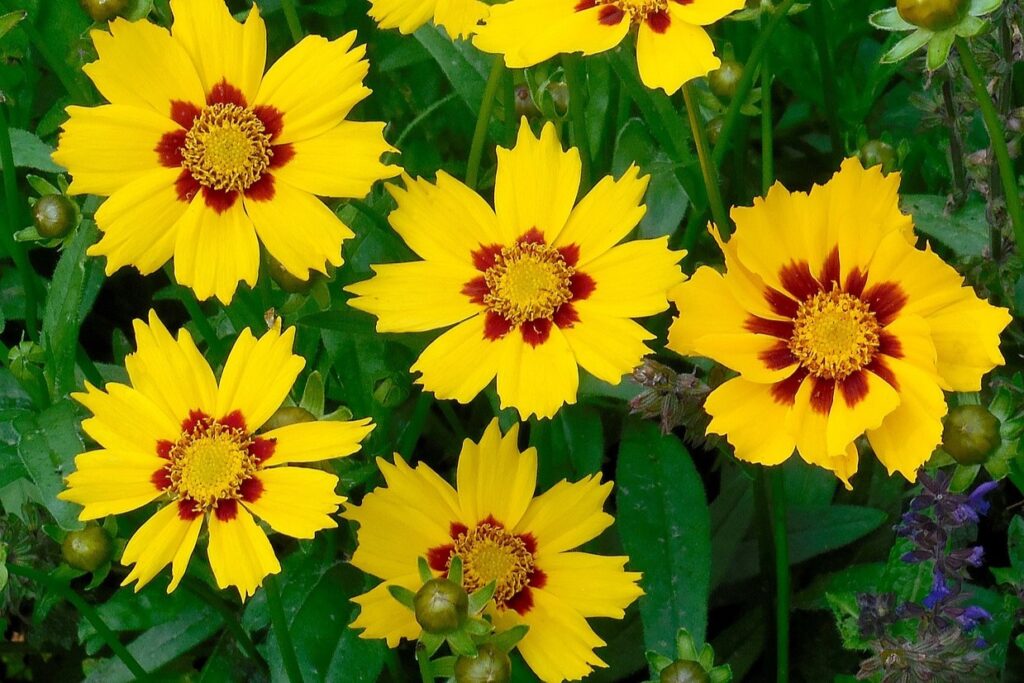
Coreopsis is a bright, golden flowering plant that is still rare in urban balconies but loved by bees.
Why it’s special:
It offers long-lasting blooms with minimal care and high nectar availability.
Key Features / Care Tips:
- Sunlight:
Full sun for continuous flowering. - Watering:
Low watering once established. - Soil Type:
Average to poor soil works well. - Seasonal Care:
Summer-flowering plant.
Quick Pro Tip:
Deadheading spent blooms to extend the flowering season.
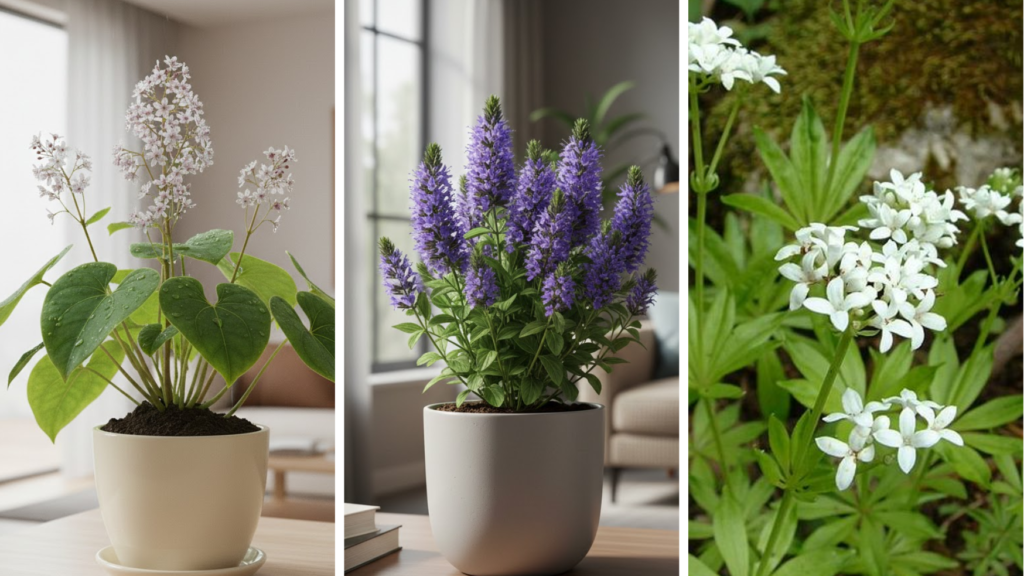
Why These Plants That attract bees on your balcony Actually Work
Key Benefits:
- Higher bee activity even in high-rise balconies
- Longer flowering duration
- Unique, premium visual appeal
- Low maintenance once established
- Supports urban pollinators naturally
Conclusion
If you want your balcony to be more than just decorative, these 8 Balcony Plants That Attract Bees Instantly are the perfect upgrade. They’re rare, beautiful, and designed by nature to invite life, movement, and balance into small urban spaces.
🌼 Which rare plant impressed you the most? Share in the comments and start building your own pollinator paradise today.